

The Paros Innovation Center brought together students from three schools on the island of Paros, forming the aerospace engineering team Archilochus.sat, which successfully completed the Critical Design Review (CDR) phase of the CanSat in Greece 2026 competition.
The official CDR was submitted on January 31, 2026 . Out of the 31 teams initially registered nationwide, only 19 advanced to the CDR phase, with potentially fewer ultimately presenting at review level. Archilochus.sat reached this demanding milestone and achieved a CDR evaluation score of 73.2/100.
Although the team did not qualify for the fourth and final national launch phase, reaching the CDR stage in its first participation represents a substantial technical and scientific achievement.
The Purpose of the Mission
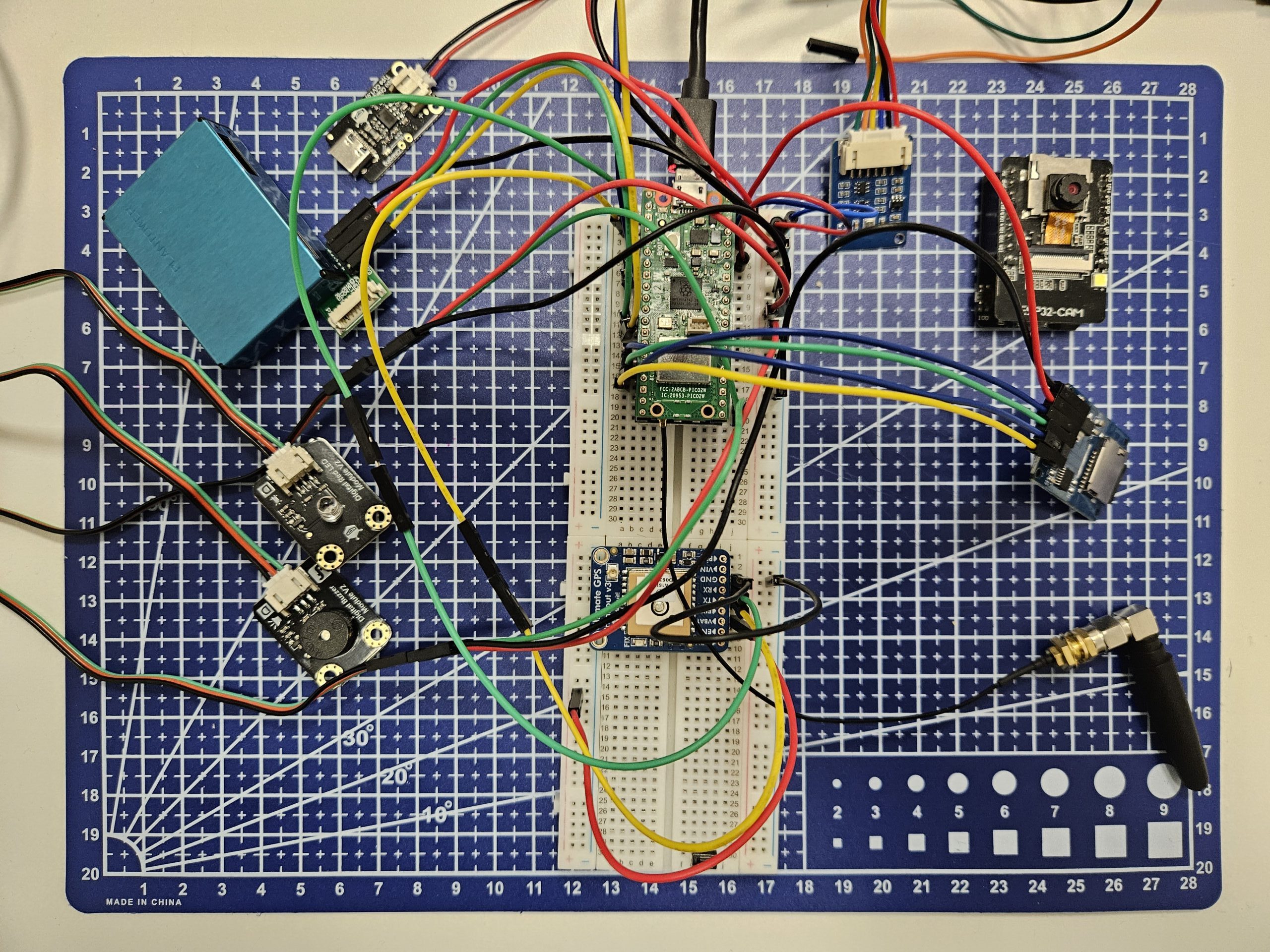
The purpose of Archilochus.sat was to design and document a fully integrated atmospheric research system within the strict dimensional and operational constraints of a CanSat. The mission combined environmental sensing, real-time telemetry, onboard data logging, optical observation, and post-flight scientific analysis.
The primary mission focused on measuring atmospheric pressure, temperature, and relative humidity during descent, allowing the calculation of altitude and descent rate. These measurements enable the creation of a vertical atmospheric profile and the validation of physical relationships between pressure and altitude.
The secondary mission carried particular scientific significance. The team measured particulate matter concentrations (PM1.0, PM2.5, PM10) at different altitudes in order to explore the vertical distribution of micro-pollutants in the lower atmosphere. Fine particles such as PM2.5 are among the most critical air pollutants globally, directly linked to respiratory and cardiovascular health risks. By combining particulate measurements with altitude, time, and optical cloud indexing derived from onboard images, the team aimed to construct a three-dimensional environmental interpretation of atmospheric conditions. This transformed the CanSat from a telemetry device into a compact environmental research platform.
The Parachute System and Drop Tests
A critical part of the mission was the safe and controlled descent of the CanSat. The team designed and constructed a circular parachute with a target descent rate of 5–6 m/s. The parachute underwent multiple low-altitude drop tests to evaluate canopy deployment time, symmetry, oscillation behavior, and structural integrity.
Operating from an island environment presented unique challenges. Paros does not have high buildings suitable for realistic high-altitude drop testing. As a result, the team was limited to lower-height validation tests and had to plan drone-assisted drops for extended evaluation. This limitation reduced the number of full-scale validation cycles that could be completed before the CDR submission.
Despite these constraints, the parachute tests successfully validated canopy opening performance, confirmed acceptable descent behavior within the tested range, and allowed iterative mechanical improvements. The experience also reinforced the importance of redundancy and structured risk analysis in aerospace system design.
The Team
Archilochus.sat was formed by students from:
Chara Stavrou
Thodoris Kostov
Kostantinos Malliaris
Paroikia Senior High School
Marianthi Kamaratou
Iakovos Spanopoulos
Paroikia High School
Ilias Tziotis
Archilochos High School
The mentor of the team is Dimitris Papanagiotakis, Academic Director of the Paros Innovation Center, Industrial Information Technology Engineer and STEM Educator.
The students deserve sincere congratulations for engaging in such a demanding multidisciplinary aerospace project. Designing, integrating, testing, and documenting a complete CanSat system requires maturity, discipline, and a strong systems engineering mindset.
Challenges of the Island Environment
Beyond the limitations in drop testing infrastructure, the team also faced logistical challenges related to hardware procurement and shipping timelines. Delays in material delivery and restricted access to specialized equipment compressed the available iteration time before the CDR deadline. Operating in a remote island setting requires additional planning, flexibility, and resilience — qualities that the team developed throughout the project.
Looking Ahead
A full presentation of the project will take place in all schools of Paros, sharing the experience, the lessons learned, and the vision for the future.
The Paros Innovation Center will establish a Space Technology Academy, creating a structured pathway for aerospace and satellite engineering education on the island. Preparation for the next competition cycle will begin in June 2026, with earlier team formation and extended development and testing phases.
The objective remains clear and unwavering:
Students of Paros will reach space.
Archilochus.sat
Paros Innovation Center
CanSat Greece 2026
From a Greek island to space.